


Why ROC compliance matters before closing or selling a company

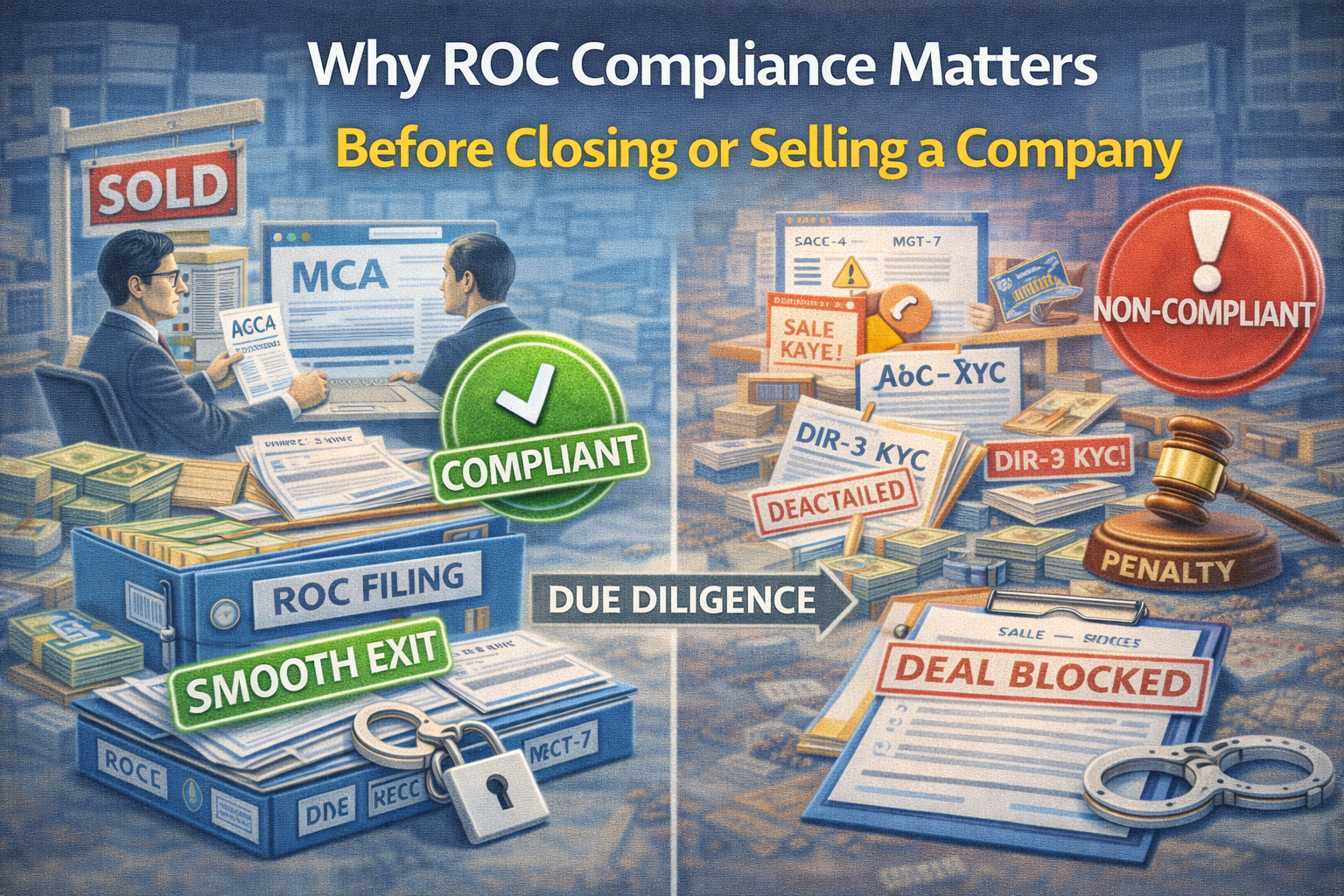
Many business owners decide to close or sell a company assuming it will be quick and simple.
That assumption breaks the moment due diligence starts.
Whether you plan to close, sell, merge, or transfer ownership, the first thing checked is ROC compliance.
If ROC records are not clean, the exit gets delayed or completely blocked.
This blog explains why ROC compliance is critical before closing or selling a company.
What Is ROC Compliance
ROC compliance means timely filing of all statutory returns and event-based forms with the Registrar of Companies under the Companies Act, 2013.
This includes:
Annual filings (AOC-4, MGT-7 / MGT-7A)
Director compliances (DIR-3 KYC)
Share capital and allotment filings
Registered office updates
Director appointment and resignation filings
ROC records show the legal history of the company.
Why ROC Compliance Is Checked Before Closure or Sale
Before approving:
Strike-off
Voluntary liquidation
Sale of shares
Merger or acquisition
Authorities, buyers, and professionals verify:
Whether the company is compliant
Whether directors are eligible
Whether ownership records are correct
Non-compliance stops the process immediately.
Importance of ROC Compliance Before Closing or Selling
1. Mandatory for Strike-Off and Closure
ROC will not approve:
Voluntary strike-off
Closure applications
if:
Annual filings are pending
Financial statements are not filed
Director KYC is incomplete
Past defaults must be cleared first.
2. Essential for Sale of Company or Shares
Buyers conduct ROC due diligence to check:
Shareholding pattern
Capital structure
Director history
Past penalties and notices
If ROC records are messy:
Buyer backs out
Valuation drops
Deal gets delayed or cancelled
No buyer takes compliance risk.
3. Protects Sellers and Directors from Future Liability
If ROC records are not updated properly:
Old directors may still appear responsible
Notices may continue after sale
Legal liability may follow ex-owners
Clean ROC exit ensures clean legal exit.
4. Required for Due Diligence and Valuation
Professional advisors verify:
Consistency between ROC filings and financials
Proper filing of share transfers and allotments
Non-compliance raises red flags and reduces company value.
5. Prevents Last-Minute Penalties and Stress
Fixing years of ROC non-compliance at exit stage leads to:
Heavy late fees
Urgent filings
Missed timelines
Deal fatigue
Early compliance avoids panic at exit.
Common ROC Issues That Block Closure or Sale
Non-filing of annual returns
Missing AOC-4 or MGT-7
DIR-3 KYC defaults
Unreported share allotments
Incorrect director resignation records
These issues surface only when it’s almost too late.
How to Prepare for a Clean Exit
Review ROC compliance history early
Clear pending filings year-wise
Update director and share records
Match financials with ROC data
Exit planning should start with compliance review.
Conclusion
ROC compliance is not just about running a company.
It is about exiting the company safely and legally.
Companies with clean ROC records:
Close faster
Sell easily
Command better valuation
Protect directors from future risk
Ignoring ROC compliance can trap you in a dead company for years.
Call to Action
If you are planning to close or sell your company, review and correct your ROC compliance first. A clean ROC record is the foundation of a smooth and safe exit.
Written by:
Abhishek Gupta
Chartered Accountant
Office No. 19, Sagar Building, 4th Floor, Plot-327,
Narshi Natha Street, Masjid Bunder (West),
Mumbai – 400009
📞9324776120
🌐 www.consultguruji.com