


Importance of maintaining ROC records for future litigation safety

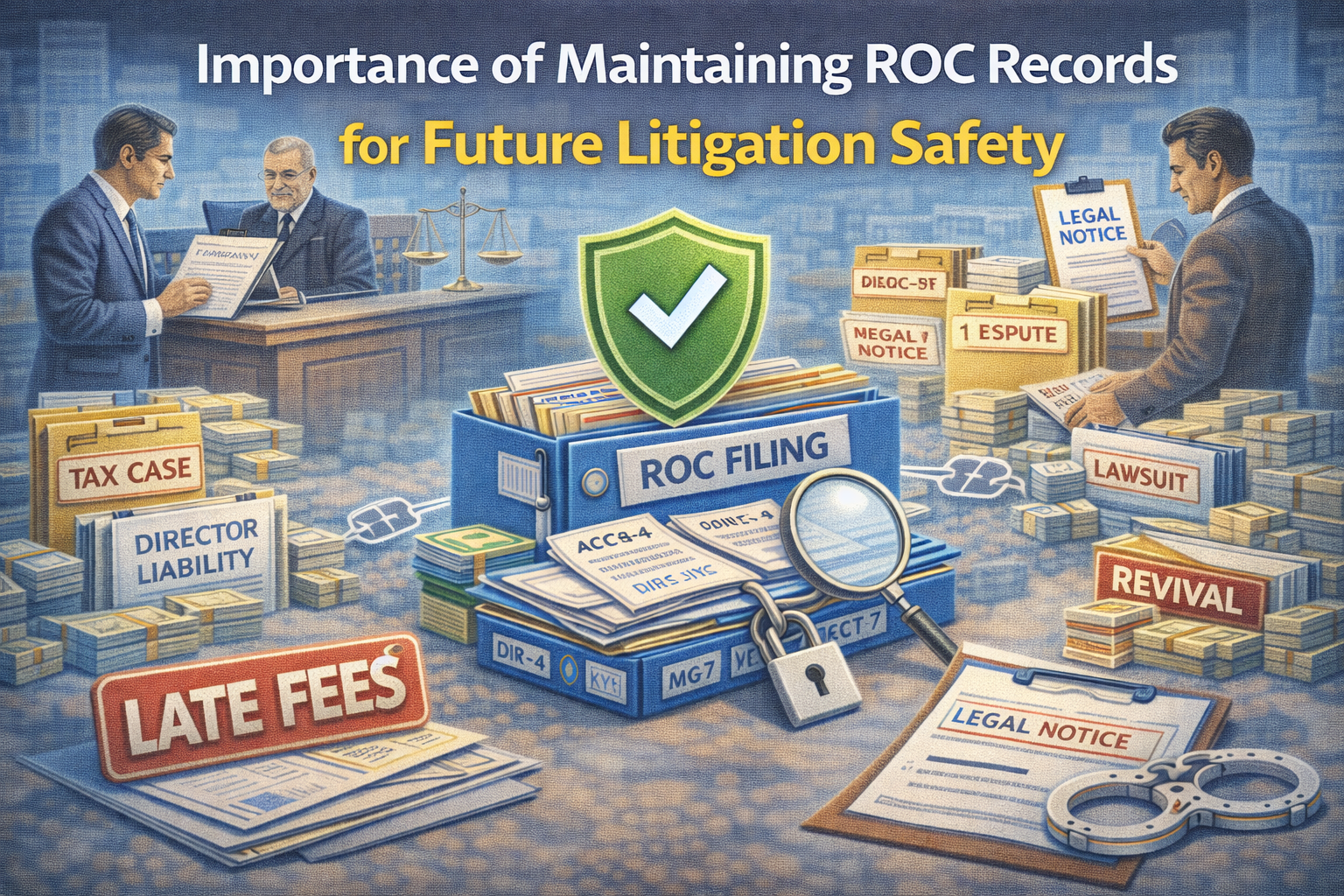
Introduction
Most companies look at ROC filings as routine compliance.
Very few realise that ROC records act as legal evidence in future disputes.
When litigation arises—whether tax, corporate, shareholder, or regulatory—ROC records are the first documents courts and authorities rely on.
Weak or missing ROC records can put directors and companies at serious legal risk.
This blog explains why maintaining proper ROC records is critical for future litigation safety.
What Are ROC Records
ROC records include all statutory filings and disclosures made with the Registrar of Companies under the Companies Act, 2013.
Key ROC records include:
AOC-4 and MGT-7 / MGT-7A
Director appointment and resignation filings
Share capital and allotment records
Registered office address filings
Director KYC records
These records form the official legal history of the company.
Why ROC Records Matter in Litigation
Courts, tribunals, and authorities treat ROC records as:
Government-verified documents
Authentic and reliable evidence
Proof of management, ownership, and responsibility
In disputes, ROC records often override internal documents.
Importance of Maintaining ROC Records for Legal Safety
1. Protection of Directors from Personal Liability
In litigation, authorities check:
Who was director at the relevant time
Whether resignation was properly filed
Whether director was compliant
If ROC records are incorrect:
Ex-directors may still be held liable
Notices may be wrongly issued
Defence becomes weak
Correct ROC records protect individuals.
2. Strong Defence in Tax and Regulatory Proceedings
Income Tax, GST, and MCA rely on ROC data to determine:
Company activity status
Management control
Financial disclosures
Clean ROC records help:
Prove genuineness of transactions
Counter allegations of shell or dummy entities
Defend additions and penalties
3. Clarity in Shareholder and Ownership Disputes
In disputes between:
Founders
Shareholders
Investors
ROC records are used to verify:
Shareholding pattern
Capital changes
Voting rights
If ROC filings are outdated or incorrect, legal position weakens immediately.
4. Evidence in Corporate and Commercial Litigation
In cases involving:
Fraud allegations
Mismanagement
Contract disputes
Insolvency proceedings
Courts rely on ROC filings to establish:
Who controlled the company
When decisions were taken
Who is responsible
Missing filings create gaps that are hard to explain later.
5. Safety During Company Closure, Sale, or Revival
When a company is:
Sold
Closed
Revived
Merged
Past ROC records are examined to determine:
Liability of past directors
Pending obligations
Legal exposure
Incomplete ROC history can reopen old liabilities.
Common ROC Record Mistakes That Hurt Litigation Defence
Non-filing of resignation of directors
Missing annual returns for past years
Unreported share allotments
Incorrect registered office records
Mismatch between ROC and financials
These mistakes surface only when litigation starts.
How Companies Can Ensure Litigation Safety
Maintain year-wise ROC filing history
Keep acknowledgment and challans safely
Ensure ROC data matches financial and tax records
Periodically review MCA portal records
Prevention is far cheaper than legal defence.
Conclusion
ROC records are not just compliance documents.
They are legal shields for companies and directors.
Maintaining accurate and timely ROC records:
Strengthens litigation defence
Protects directors personally
Reduces regulatory and legal risk
Ignoring ROC record maintenance is gambling with future legal safety.
Call to Action
If your company has old or incomplete ROC records, review and correct them now. Proper ROC documentation today can save years of litigation stress tomorrow.
Written by:
Abhishek Gupta
Chartered Accountant
Office No. 19, Sagar Building, 4th Floor, Plot-327,
Narshi Natha Street, Masjid Bunder (West),
Mumbai – 400009
📞9324776120
🌐 www.consultguruji.com