


Importance of ROC Compliance for Startups and New Companies

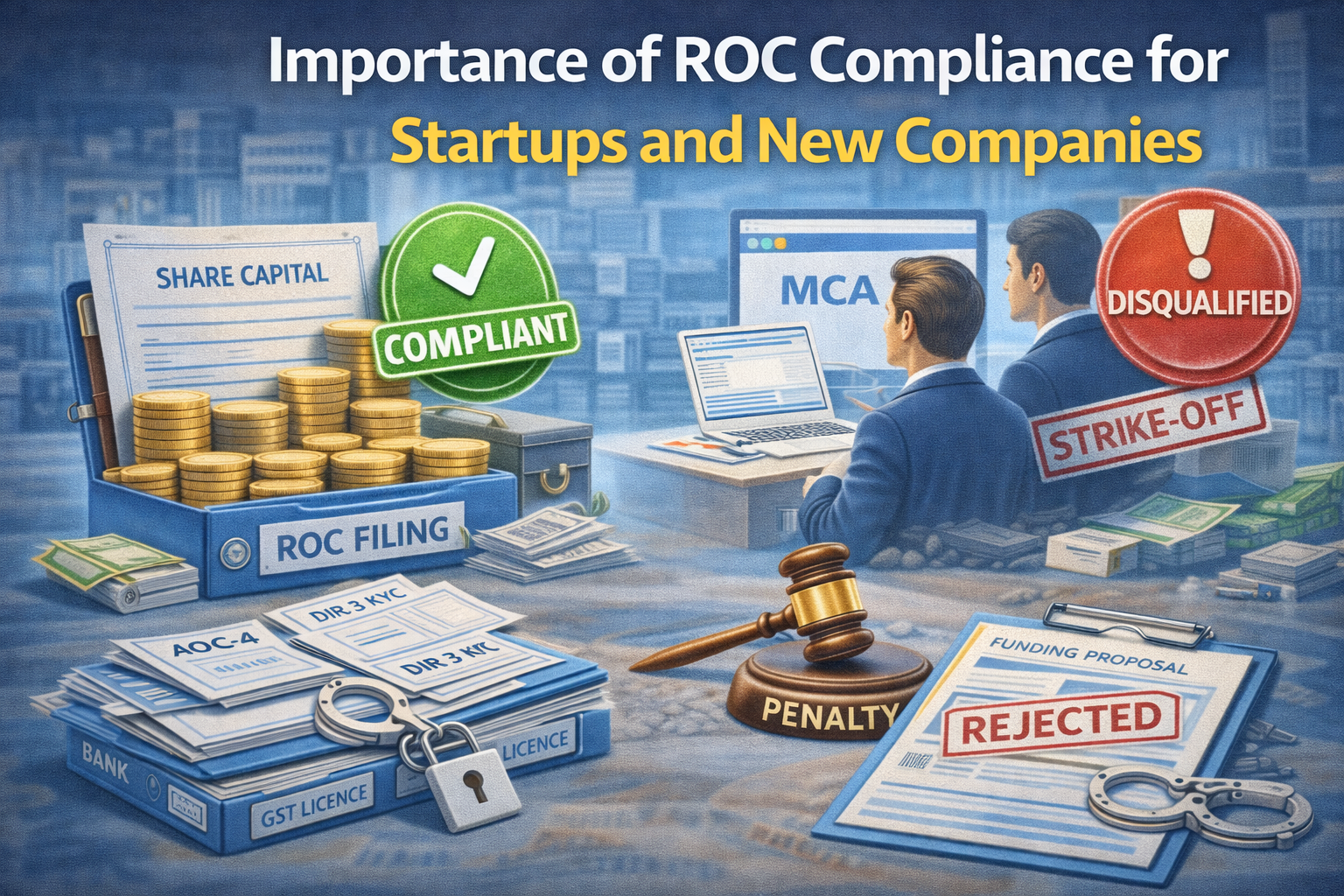
Introduction
Most startups focus on product, funding, and growth. Compliance usually comes last.
That’s a mistake.
ROC compliance is not paperwork for later. It is the legal foundation of a startup.
Ignoring it in the early years leads to penalties, director issues, and problems during funding or exit.
This blog explains why ROC compliance is critical for startups and newly incorporated companies.
What Is ROC Compliance
ROC compliance means filing mandatory returns and event-based forms with the Registrar of Companies under the Companies Act, 2013.
For startups and new companies, this includes:
Annual filings (AOC-4, MGT-7 / MGT-7A)
Director compliances (DIR-3 KYC)
Event-based filings (director changes, address change, share allotment, etc.)
These filings keep the company legally active and trustworthy.
Why Startups Must Take ROC Compliance Seriously
Many startups assume:
No revenue means no compliance
Early-stage companies get relaxations
Compliance can be fixed later
What this really means is risk piling up silently.
ROC compliance applies from day one, regardless of turnover or activity.
Importance of ROC Compliance for Startups
1. Keeps the Company Legally Active
ROC filings ensure the company status remains Active on the MCA portal.
Non-filing can lead to:
Company marked as non-compliant
Strike-off risk
Difficulty operating bank accounts
An inactive status kills credibility instantly.
2. Protects Founders and Directors
Founders are directors. Director-level consequences hit personally.
Non-compliance can lead to:
Director disqualification
DIN deactivation
Inability to start or join other ventures
This is a career-level risk.
3. Mandatory for Fundraising and Investment
Investors and VCs check:
ROC filing history
Shareholding records
Director compliance status
Even one missed filing can:
Delay funding
Reduce valuation
Kill deals during due diligence
Compliance builds investor confidence.
4. Essential for Bank Accounts, GST, and Licences
Banks and authorities cross-verify:
ROC records
Registered office address
Director details
ROC non-compliance causes:
Bank KYC issues
GST complications
Licence and registration delays
Operations suffer directly.
5. Clean Exit, Merger, or Shutdown
Startups often plan:
Acquisition
Merger
Strategic sale
Voluntary strike-off
None of these are possible without clean ROC records.
Fixing years of non-compliance later is expensive and stressful.
Common ROC Mistakes by Startups
Skipping annual filing due to no revenue
Ignoring DIR-3 KYC
Delayed share allotment filings
Not updating registered office address
Assuming CA or consultant will handle everything
Responsibility still lies with founders.
How Startups Can Stay ROC Compliant
Track ROC compliance calendar
File even during zero-revenue years
Complete director compliances personally
Take professional help early, not after notices
Early discipline saves future damage.
Consequences of Ignoring ROC Compliance
Heavy late fees and penalties
Director disqualification risk
Strike-off proceedings
Funding and banking issues
Legal exposure during audits
Most startups realise this too late.
Conclusion
ROC compliance is not a burden for startups.
It is a growth enabler and safety net.
Startups that stay compliant:
Scale smoothly
Raise funds easily
Exit cleanly
Protect founders legally
Ignoring ROC compliance puts the entire startup journey at risk.
Call to Action
If you are a startup or newly incorporated company, ensure your ROC compliance is in order from the beginning. Early compliance prevents costly corrections later.
Written by:
Abhishek Gupta
Chartered Accountant
Office No. 19, Sagar Building, 4th Floor, Plot-327,
Narshi Natha Street, Masjid Bunder (West),
Mumbai – 400009
📞9324776120
🌐 www.consultguruji.com