


Powers of the Assessing Officer under the Income-tax Act, 2025: Scope, Limits, and Safeguards

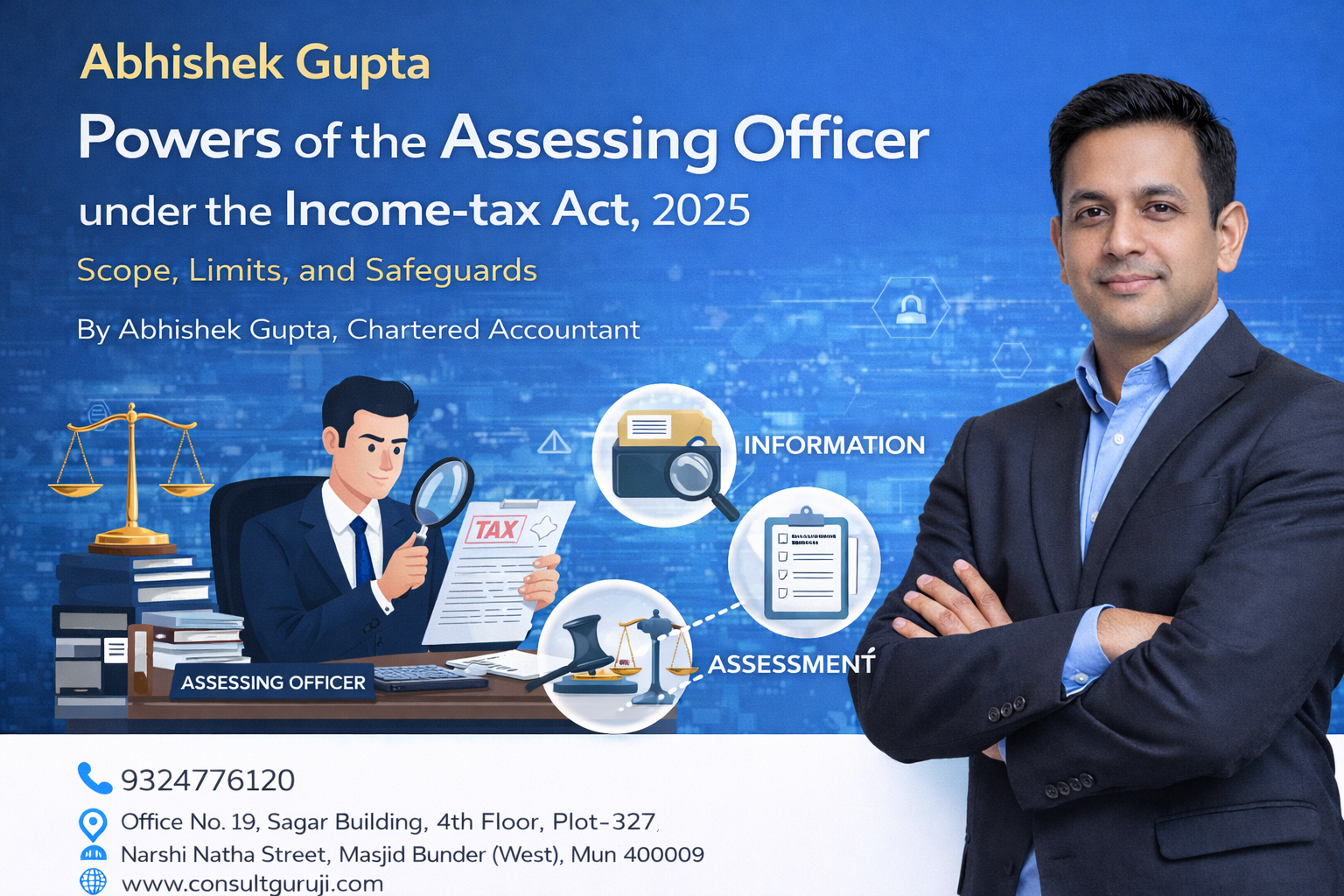
The Assessing Officer (AO) plays a central role in the administration of income-tax law. Under the Income-tax Act, 2025, the powers of the Assessing Officer continue with structural continuity, but are now exercised within a more technology-driven and accountability-based framework.
Understanding these powers is essential for taxpayers to protect their rights and respond effectively during assessment proceedings.
Statutory Role of the Assessing Officer
An Assessing Officer is authorised to:
Examine returns of income
Call for information and documents
Conduct assessments and reassessments
Determine tax liability in accordance with law
The AO’s authority flows strictly from the statute. It is wide, but not unlimited.
Power to Call for Information
The AO may require a taxpayer to:
Produce books of accounts
Furnish explanations for transactions
Submit supporting documents
This power is intended to verify correctness of income, not to conduct fishing or roving inquiries.
Requests must be relevant, reasonable, and specific.
Power to Make Assessment
The AO has the power to:
Accept the return as filed
Make adjustments after scrutiny
Reject books of accounts where legally permissible
Estimate income based on material available
However, every assessment must comply with:
Principles of natural justice
Proper opportunity of being heard
Reasoned and speaking order
Assessment without due process is legally vulnerable.
Power of Reassessment
Under the new law, reassessment powers exist but are procedurally constrained.
Before initiating reassessment:
Information suggesting income escapement must exist
Prior approval must be obtained
Opportunity must be given to the taxpayer
Reassessment is no longer an open-ended power.
Power to Impose Penalties and Initiate Proceedings
The AO may initiate:
Penalty proceedings
Prosecution proceedings in serious cases
However, such powers must be exercised with due application of mind. Automatic or mechanical initiation is not sustainable in law.
Limitations and Safeguards
The powers of the AO are subject to:
Statutory limitations
Judicial precedents
Supervisory approvals
Appellate scrutiny
Taxpayers retain the right to:
Seek adjournments
File objections
Appeal against arbitrary orders
Power without accountability does not survive judicial review.
Conclusion
Under the Income-tax Act, 2025, the Assessing Officer’s powers remain extensive but are tempered by procedure, technology, and judicial oversight.
For taxpayers, awareness of these powers is the first line of defence.
For the department, lawful exercise of power is the foundation of sustainable assessments.
The law empowers the Assessing Officer, but it equally protects the taxpayer.
Written by:
Abhishek Gupta
Chartered Accountant
Office No. 19, Sagar Building, 4th Floor, Plot-327,
Narshi Natha Street, Masjid Bunder (West),
Mumbai – 400009
📞9324776120
🌐 www.consultguruji.com