


Revised Return vs Updated Return under Income-tax Act, 2025

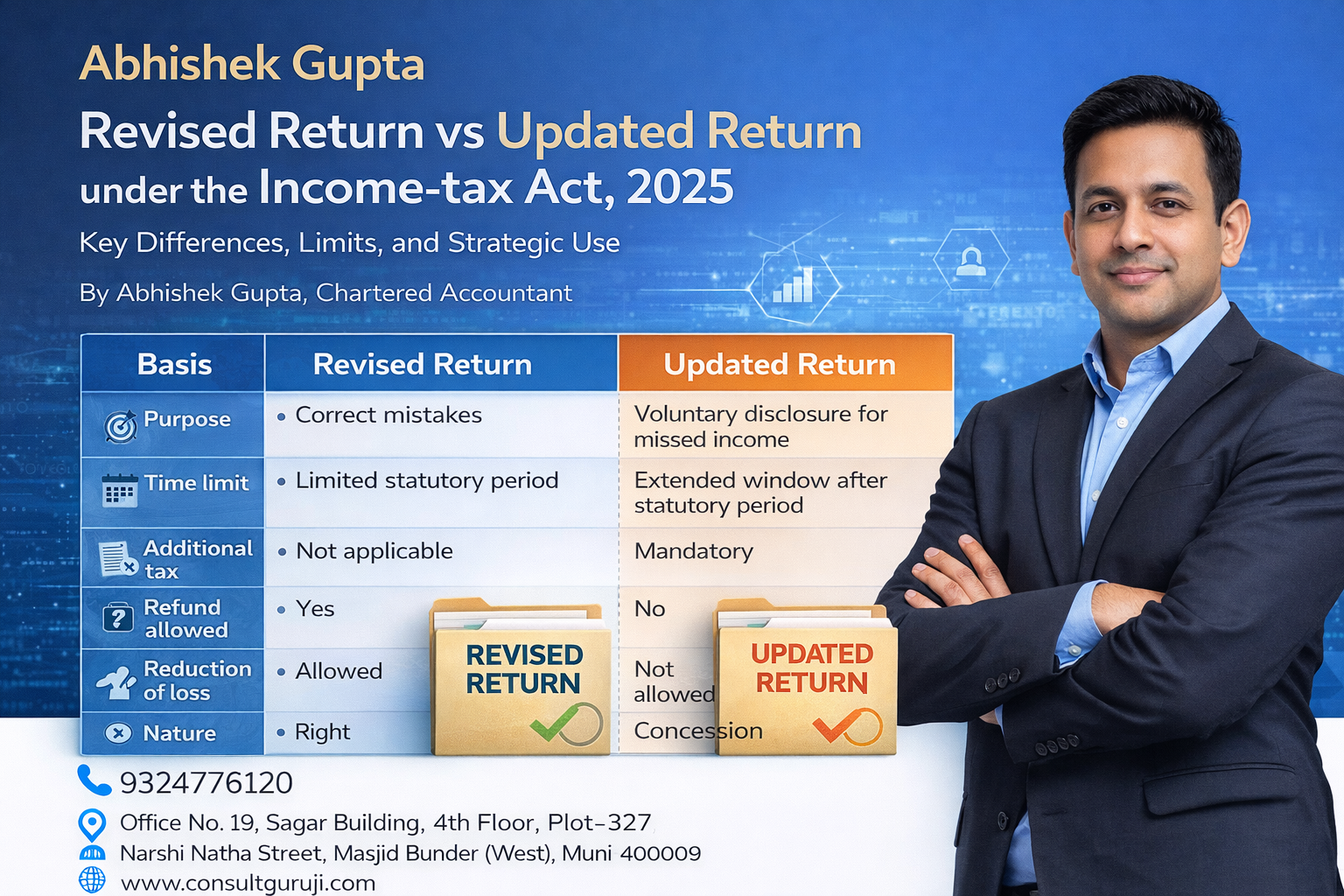
The Income-tax Act allows taxpayers to correct mistakes in return filing, but not all correction mechanisms are equal. Under the Income-tax Act, 2025, Revised Return and Updated Return serve different legal purposes and carry very different consequences.
Understanding this distinction is critical, especially in an era of data-driven scrutiny.
What Is a Revised Return
A Revised Return allows a taxpayer to correct any error or omission in the originally filed return.
It can be filed when:
The original return was filed within the due date or as a belated return
There is no intent to conceal income
The correction is made within the prescribed time limit
A revised return replaces the original return entirely.
In simple terms, it is a correction without penalty, provided it is done within time.
What Is an Updated Return
An Updated Return is a later-stage disclosure mechanism introduced to encourage voluntary compliance.
It can be filed even after the time limit for revision has expired, but:
Additional tax is mandatory
Certain cases are excluded
It cannot be used to reduce tax liability or claim refund
An updated return is a concession, not a right.
Key Differences Between Revised and Updated Return
Basis Revised Return Updated Return
Purpose Correct genuine mistakes Voluntary disclosure of missed income
Time limit Limited statutory period Extended window with restrictions
Additional tax Not applicable Mandatory additional tax
Refund allowed Yes No
Reduction of loss Allowed Not allowed
Nature Right Concession
This table alone can prevent costly compliance mistakes.
When Should Each Be Used
Use a Revised Return when:
Error is identified early
No additional tax exposure exists
Losses or deductions need correction
Use an Updated Return when:
Income was genuinely missed
Detection risk is high
You want to close exposure before department action
What this really means is:
Revised return is correction. Updated return is damage control.
Compliance Risks and Practical Caution
Updated returns are closely monitored. Filing one signals that:
Original disclosure was incomplete
Additional tax is being voluntarily paid
While this may prevent harsher action, it also creates a permanent record.
Strategic judgment is essential.
Conclusion
Under the Income-tax Act, 2025, Revised Return and Updated Return are not interchangeable tools.
Choosing the wrong route can:
Increase tax cost
Block refunds
Trigger unnecessary scrutiny
Correct timing and informed choice make all the difference.
Written by:
Abhishek Gupta
Chartered Accountant
Office No. 19, Sagar Building, 4th Floor, Plot-327,
Narshi Natha Street, Masjid Bunder (West),
Mumbai – 400009
📞9324776120
🌐 www.consultguruji.com