


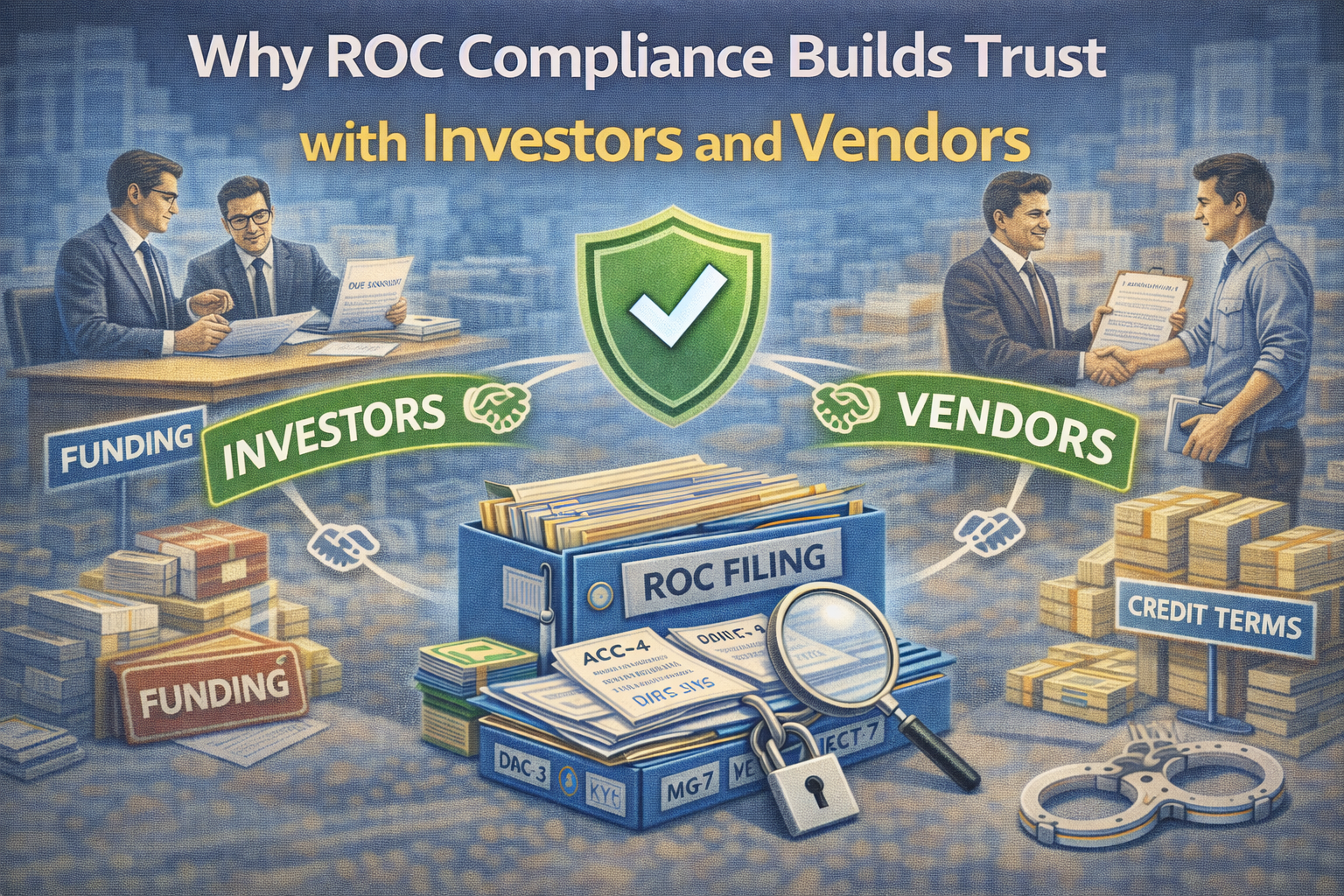
Why ROC compliance builds trust with investors and vendors

Introduction
Investors and vendors don’t trust promises.
They trust records.
Before investing money or giving long credit, the first thing they verify is whether the company is legally clean and compliant. And that check starts with ROC compliance.
This blog explains why ROC compliance plays a direct role in building trust with investors and vendors.
What Is ROC Compliance
ROC compliance means timely filing of statutory returns and disclosures with the Registrar of Companies under the Companies Act, 2013.
These filings reflect:
Company’s legal status
Director eligibility
Ownership and shareholding
Financial transparency
ROC records act as the public credibility report of a company.
Why Trust Matters for Investors and Vendors
Investors and vendors both face risk:
Investors risk capital
Vendors risk payment and credit
To reduce this risk, they verify:
Whether the company is active
Whether directors are compliant
Whether ownership records are clean
ROC compliance answers all these questions objectively.
How ROC Compliance Builds Investor Trust
1. Shows Legal Discipline
Regular ROC filings show that the company:
Respects the law
Maintains proper governance
Is not a shell or dummy entity
Investors avoid companies with sloppy compliance.
2. Enables Smooth Due Diligence
During funding or acquisition, investors check:
AOC-4 and MGT-7 filings
Shareholding and capital structure
Director history
Clean ROC records:
Speed up due diligence
Reduce legal questions
Improve valuation
Poor compliance delays or kills deals.
3. Confirms Ownership and Control
Investors want clarity on:
Who owns the company
Who controls decisions
Whether past allotments are genuine
ROC filings provide official proof, not internal claims.
How ROC Compliance Builds Vendor Trust
1. Improves Creditworthiness
Vendors often check:
MCA company status
Director background
Business continuity
A compliant company gets:
Longer credit periods
Better commercial terms
Priority over non-compliant buyers
2. Reduces Fear of Disputes
Vendors prefer companies where:
Directors are clearly identifiable
Registered office is traceable
Legal responsibility is defined
ROC compliance reduces fear of non-recovery.
3. Strengthens Long-Term Relationships
Vendors value stability.
A company with clean ROC records signals:
Long-term existence
Lower legal risk
Reliable business conduct
Trust leads to continuity.
Common ROC Issues That Destroy Trust
Non-filing of annual returns
Director DIN deactivation
Unreported share allotments
Incorrect registered office address
Past penalties and notices
These red flags are visible on MCA portal.
Why Transparency Wins Over Marketing
A strong pitch deck cannot hide:
Non-compliant ROC status
Director disqualification history
Filing defaults
ROC compliance speaks louder than presentations.
How Companies Can Build Trust Through Compliance
File ROC returns on time every year
Keep director compliances updated
Maintain accurate shareholding records
Regularly review MCA portal data
Trust is built quietly, through discipline.
Conclusion
ROC compliance is not just about avoiding penalties.
It is about earning trust.
Companies with clean ROC records:
Attract investors
Get better vendor terms
Close deals faster
Command higher credibility
Ignoring ROC compliance damages trust before negotiations even begin.
Call to Action
If your company plans to raise funds or build strong vendor relationships, review your ROC compliance today. Trust starts with clean records.
Written by:
Abhishek Gupta
Chartered Accountant
Office No. 19, Sagar Building, 4th Floor, Plot-327,
Narshi Natha Street, Masjid Bunder (West),
Mumbai – 400009
📞9324776120
🌐 www.consultguruji.com