


Why ROC non-compliance leads to heavy additional fees and prosecution

Introduction
Many companies ignore ROC compliance thinking penalties will be small or manageable later.
That assumption is expensive.
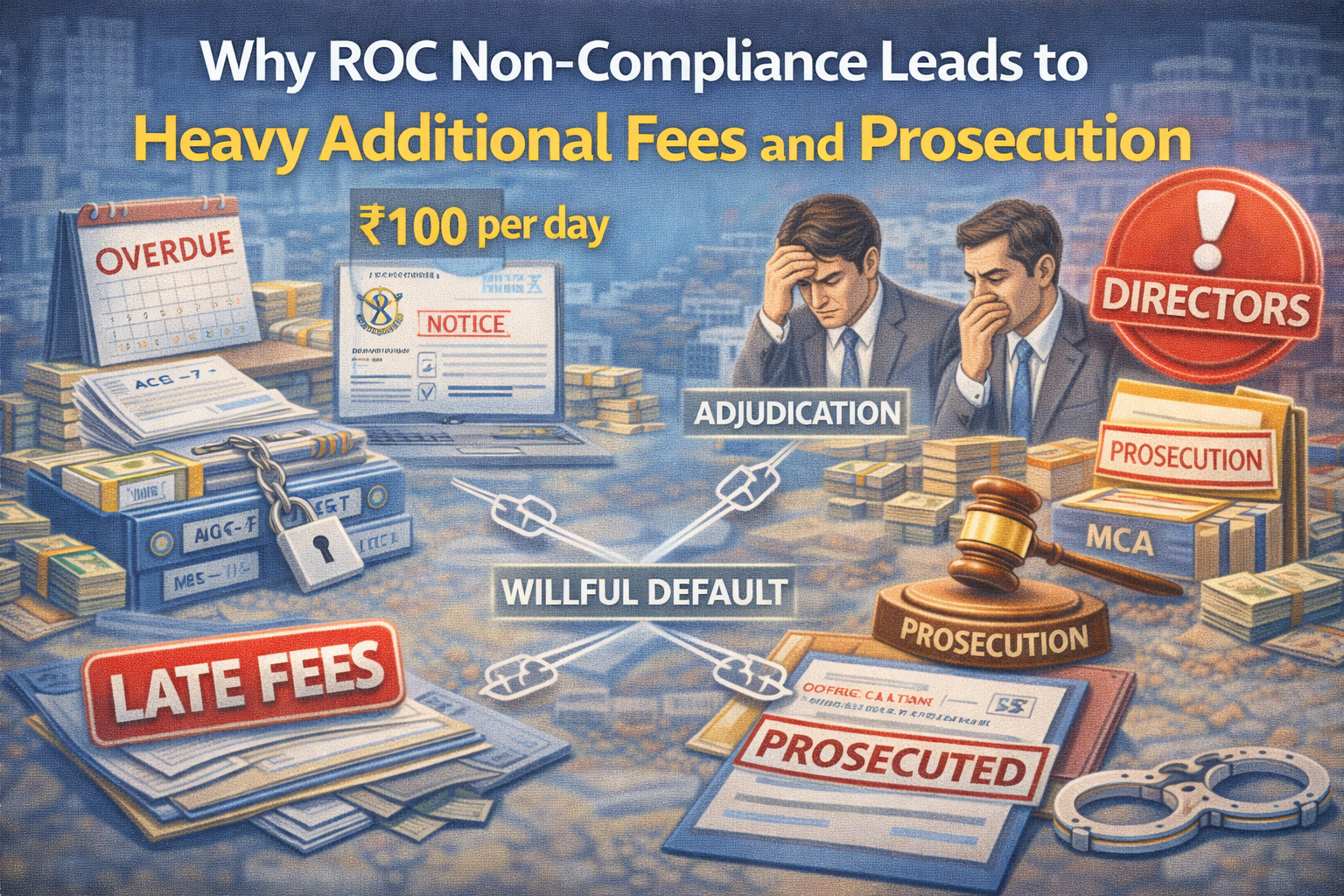
ROC non-compliance does not just attract late fees. Over time, it leads to heavy additional fees, legal notices, and even prosecution of directors.
This blog explains why ROC treats non-compliance seriously and how small delays turn into major legal trouble.
What Is ROC Non-Compliance
ROC non-compliance means failure to file mandatory returns or forms within prescribed timelines under the Companies Act, 2013.
Common defaults include:
Non-filing of AOC-4 and MGT-7
Delay in DIR-3 KYC
Non-reporting of director or share capital changes
Failure to update registered office address
All such defaults are tracked by the Registrar of Companies electronically.
Why ROC Imposes Heavy Additional Fees
ROC compliance is time-bound by law, not discretionary.
Late fees are designed to:
Force timely compliance
Prevent misuse of corporate structure
Ensure transparency and accountability
That’s why most ROC forms carry per-day penalties, often without any maximum cap.
How Small Defaults Turn into Heavy Fees
1. Per-Day Late Fee Structure
Many ROC forms attract:
₹100 per day
Per form
Per year
A delay of a few years can easily result in penalties running into lakhs, even for small companies.
2. Multiple Forms, Multiple Years
One year of non-compliance usually means:
AOC-4 not filed
MGT-7 not filed
DIR-3 KYC default
Multiply this by 2–3 years and the penalty snowballs quickly.
Why ROC Initiates Prosecution
When non-compliance continues despite:
Late fee accumulation
Notices
Default history
ROC treats it as willful default, not a mistake.
At this stage, ROC may initiate:
Adjudication proceedings
Prosecution under Companies Act
Personal liability on directors and officers
This is where compliance becomes a legal problem.
Director Liability in ROC Prosecution
Directors are not shielded by the company.
ROC can:
Issue show-cause notices to directors
Impose penalties personally
Initiate prosecution for continuing default
In serious cases, this can lead to:
Court proceedings
Disqualification risk
Reputational damage
Many directors face prosecution even when the company is inactive.
Common Situations Leading to Prosecution
Non-filing of annual returns for multiple years
Ignoring ROC notices
Struck-off company with unresolved defaults
Wrong assumption that “no business” means no compliance
Most prosecutions arise from long-term neglect, not one-time delay.
Why Ignoring ROC Notices Is Dangerous
ROC notices are legal communications.
Ignoring them can lead to:
Ex-parte orders
Higher penalties
Immediate prosecution
Once prosecution starts, compliance becomes costlier and stressful.
How Companies Can Avoid Heavy Fees and Prosecution
File ROC returns on time every year
Clear pending filings at earliest stage
Respond to ROC notices promptly
Do not wait for prosecution to start
Early compliance costs far less than late correction.
Conclusion
ROC non-compliance is not a harmless delay.
It is a financial and legal risk.
Ignoring ROC obligations leads to:
Heavy additional fees
Director-level liability
Prosecution and legal action
Timely ROC compliance is always cheaper, safer, and smarter.
Call to Action
If your company has pending ROC filings or has received notices, act immediately. Delaying further can turn a compliance issue into a prosecution matter.
Written by:
Abhishek Gupta
Chartered Accountant
Office No. 19, Sagar Building, 4th Floor, Plot-327,
Narshi Natha Street, Masjid Bunder (West),
Mumbai – 400009
📞9324776120
🌐 www.consultguruji.com