

What is Income Tax Notice under Section 133(6)? Complete Explanation

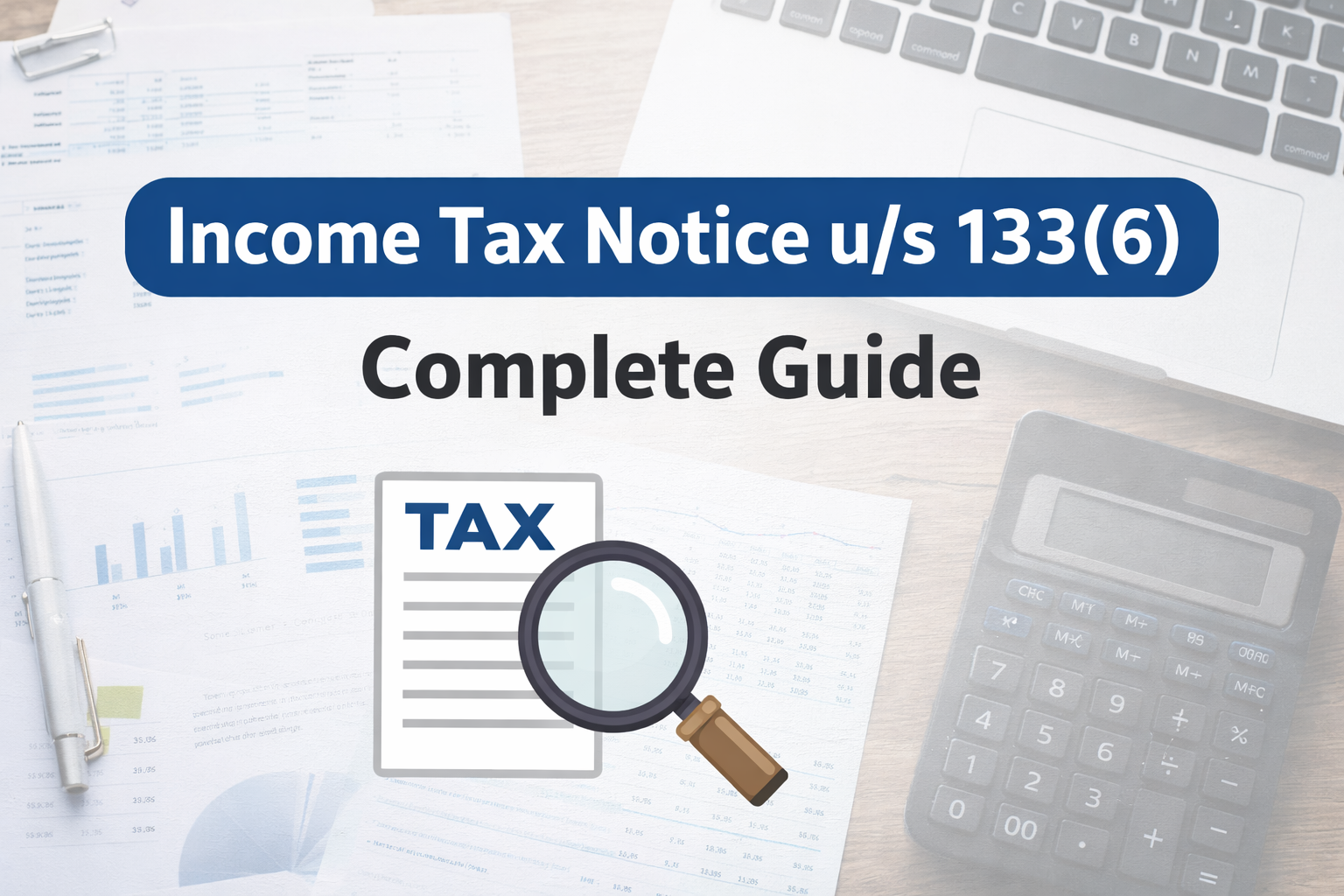
What is Income Tax Notice under Section 133(6)? Complete Explanation
Receiving an Income Tax Notice can be stressful, especially when the notice mentions Section 133(6). However, not every notice means trouble. In most cases, it is only a verification notice issued to collect information.
This article explains what a notice under Section 133(6) is, why it is issued, who receives it, and how to respond correctly.
What is Section 133(6) of the Income Tax Act?
Section 133(6) of the Income Tax Act, 1961 empowers the Income Tax Department to call for information or documents from any person, including taxpayers, banks, companies, suppliers, customers, or other third parties.
The main purpose of this section is verification of transactions and facts. It is not an assessment or penalty provision.
Why is a Notice under Section 133(6) Issued?
A notice under Section 133(6) is generally issued for verification purposes. Common reasons include verification of purchases or sales, confirmation of ledger balances, checking bank transactions, cross-verification with another taxpayer’s records, or third-party confirmation during scrutiny or investigation.
In many cases, the notice is not issued to the assessee directly, but to a related or third party.
Who Can Receive a 133(6) Notice?
A notice under Section 133(6) can be received by individuals, proprietors, partnership firms, private limited companies, banks, financial institutions, vendors, or customers of another assessee.
Even if no tax proceedings are pending against you, you may still receive this notice for information purposes.
Is Notice under Section 133(6) Serious?
Most notices under Section 133(6) are routine and information-based. It is not a demand notice and does not automatically create tax liability or penalty.
However, ignoring the notice is serious. Timely compliance is mandatory.
What Information is Usually Asked in a 133(6) Notice?
The notice may ask for copy of ledger account, confirmation of transactions, copies of invoices, bank statement extracts, balance sheet and profit and loss account, or details of relationship with the assessee.
The exact information required depends on the facts mentioned in the notice.
How to Reply to Income Tax Notice under Section 133(6)?
The reply is submitted online through the Income Tax portal. The general steps include opening the Income Tax portal, clicking on Comply to Notice, entering the DIN mentioned in the notice, verifying mobile number and email through OTP, uploading the required documents, submitting remarks, and completing Aadhaar verification.
The reply should be clear, factual, and supported by proper documents.
What Happens If You Do Not Reply to a 133(6) Notice?
Failure to reply can attract penalty under Section 272A(2)(c) of the Income Tax Act. The penalty can be Rs. 500 per day of default, subject to limits prescribed under the law.
Therefore, replying within the due date is important even if the notice is only for information.
What Happens After Submitting the Reply?
After submission, the Income Tax Department reviews the information provided. In most routine cases, no further communication is issued and the matter is closed. If further clarification is required, a follow-up notice may be sent.
Key Points to Remember
Section 133(6) is a verification provision. The notice can be issued even to third parties. It does not automatically mean tax demand. Proper and timely reply avoids penalties. Supporting documents play a crucial role.
Conclusion
A notice under Section 133(6) of the Income Tax Act is mainly issued to collect information or verify transactions. It should not be ignored, but it should not cause panic either. A correct, factual, and timely reply with proper documentation is usually sufficient to close the matter.