


Rectification of Mistakes under Income-tax Act, 2025

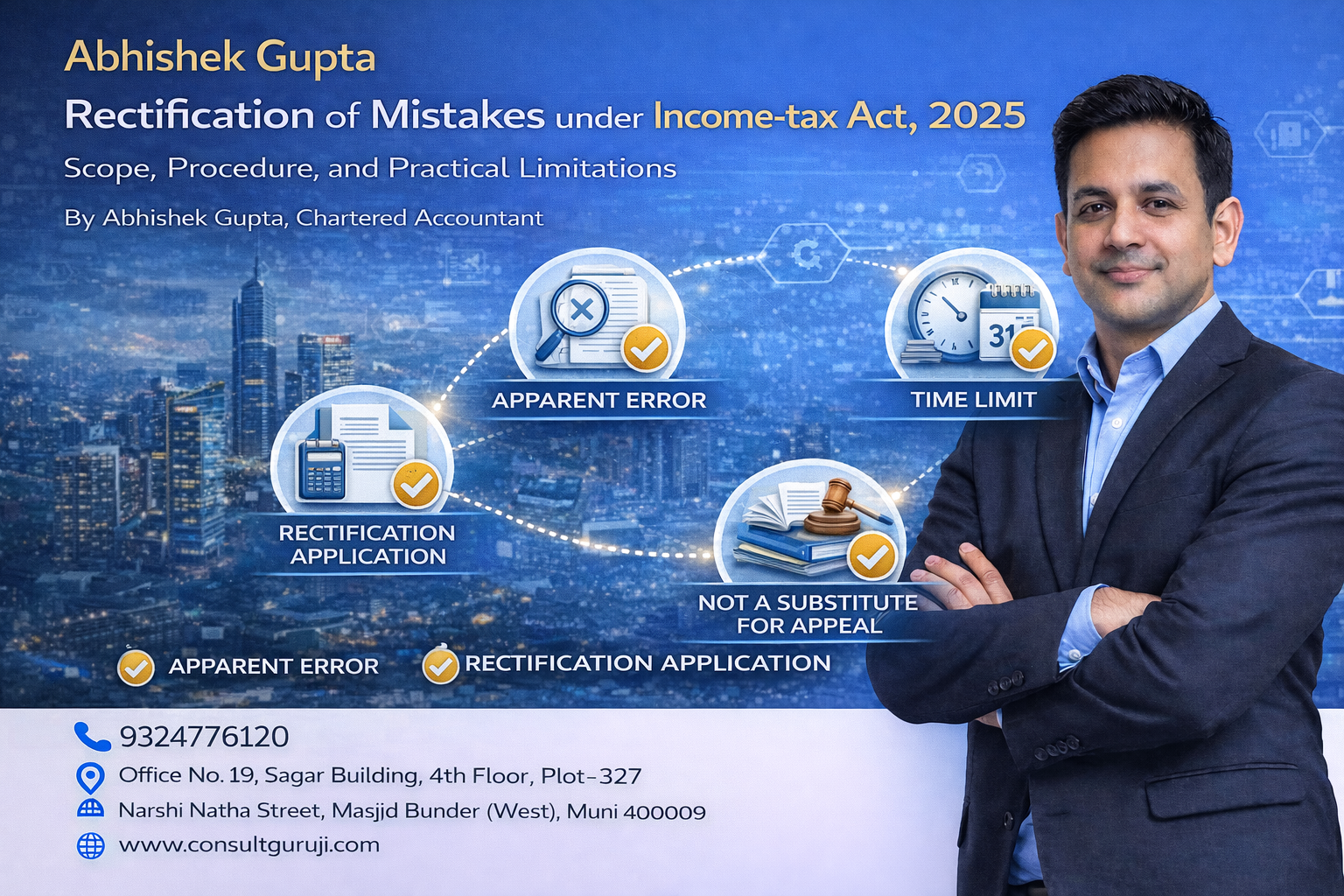
Even under a technology-driven tax system, mistakes are inevitable. Recognising this reality, the Income-tax Act, 2025 provides a statutory mechanism for rectification of mistakes. However, rectification is a limited corrective power, not a substitute for appeal or reassessment.
Understanding what can and cannot be rectified is critical for effective tax compliance.
What Is Rectification of Mistake
Rectification refers to correction of a mistake apparent on the face of the record in any order, intimation, or proceeding passed under the Act.
The key words are:
Apparent
Obvious
Non-debatable
Rectification is not meant for re-examination of issues or change of opinion.
Types of Mistakes Eligible for Rectification
Common mistakes that can be rectified include:
Arithmetical errors
Incorrect tax calculation
Incorrect carry forward of losses
Mismatch of TDS or tax credit
Clerical or typographical errors
Incorrect interest computation
If identifying the mistake requires detailed arguments or interpretation, rectification is not permissible.
Who Can Initiate Rectification
Rectification may be initiated:
By the Assessing Officer on their own
By the taxpayer through an online application
Taxpayer-initiated rectification is a valuable remedy when used correctly and timely.
Time Limit for Rectification
Rectification must be carried out within the statutory time limit calculated from the end of the financial year in which the order sought to be rectified was passed.
Delay beyond this period extinguishes the remedy permanently.
Procedure for Filing Rectification
Rectification applications are filed electronically through the income-tax portal.
Key requirements:
Correct selection of rectification category
Clear identification of mistake
Supporting documentary evidence
Consistency with records already on file
Vague or improperly filed applications are routinely rejected.
Rectification vs Appeal
Rectification is often confused with appeal.
The distinction is crucial:
Rectification corrects obvious mistakes
Appeal challenges incorrect decisions
Rectification cannot be used to introduce new claims
Appeal involves adjudication and interpretation
Using rectification where appeal is required leads to loss of time and remedies.
Common Practical Pitfalls
Rectification applications fail due to:
Attempt to reopen debatable issues
Incorrect classification of error
Mismatch with AIS or Form 26AS
Non-submission of evidence
Filing rectification instead of appeal
Precision matters more than speed.
Conclusion
Under the Income-tax Act, 2025, rectification of mistakes is a narrow but powerful remedy.
When used within its legal limits, it:
Saves time
Avoids litigation
Ensures correct tax liability
When misused, it leads to rejection and loss of valuable statutory time.
Rectification is correction, not reconsideration.
Written by:
Abhishek Gupta
Chartered Accountant
Office No. 19, Sagar Building, 4th Floor, Plot-327,
Narshi Natha Street, Masjid Bunder (West),
Mumbai – 400009
📞9324776120
🌐 www.consultguruji.com