


How DSC is Integrated into Software Applications

Introduction
With the increasing use of digital platforms, security and authentication have become critical for software applications. To ensure data integrity, user authentication, and legal compliance, many applications integrate Digital Signature Certificates (DSC).
In this blog, we will explain how DSC is integrated into software applications, why it is important, and how it helps businesses and users perform secure digital operations.
What is DSC Integration in Software?
DSC integration means enabling software applications to:
-
Detect a user’s Digital Signature Certificate
-
Digitally sign documents or data
-
Verify the identity of the signer
-
Ensure documents are not tampered with
This integration allows software to comply with government and legal requirements while maintaining high security standards.
Why is DSC Integration Important for Software Applications?
DSC integration is essential because it provides:
-
Secure authentication of users
-
Legal validity for digital documents
-
Protection against data manipulation
-
Compliance with government portals (GST, MCA, IT)
Without DSC integration, many business and compliance-related software applications cannot function effectively.
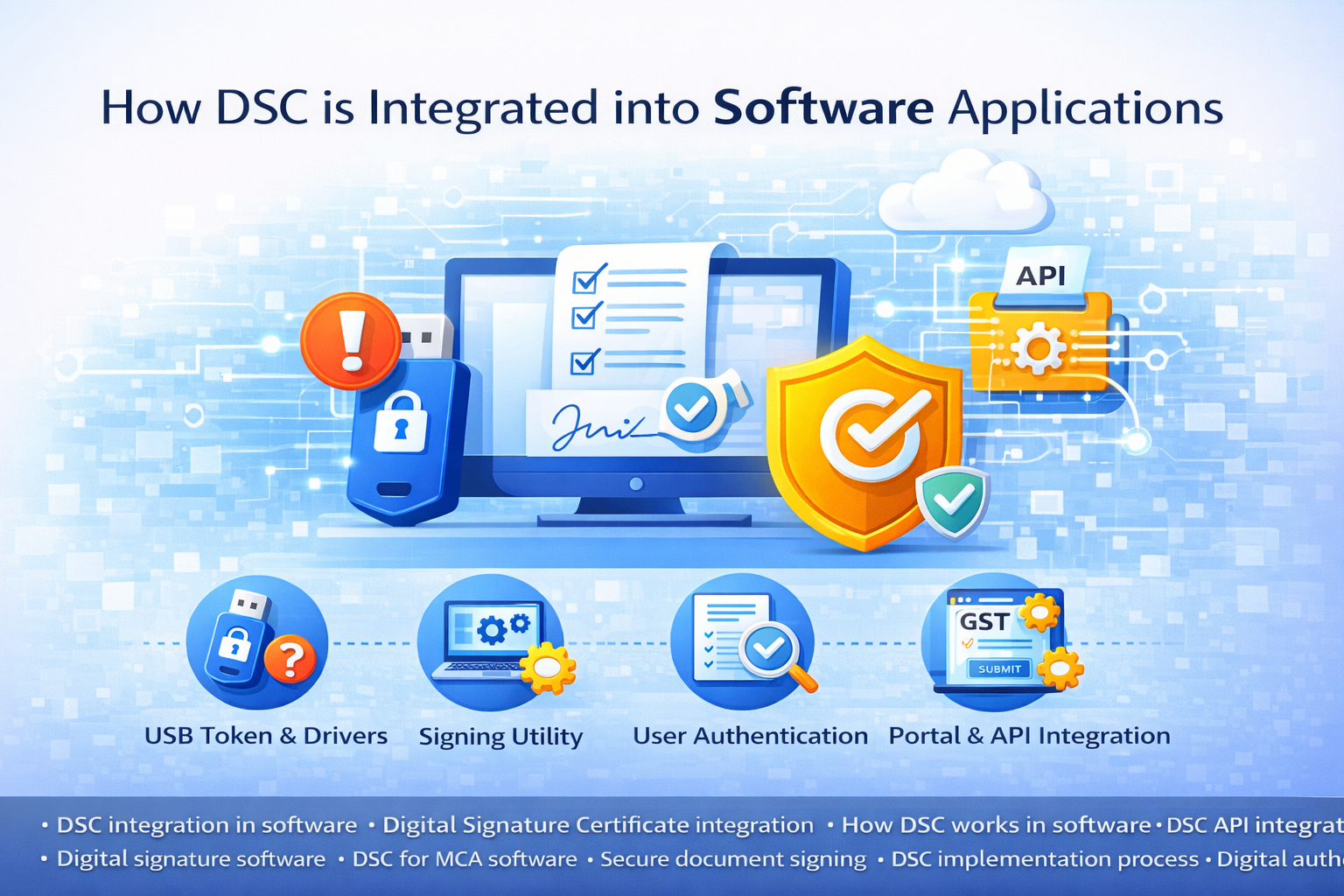
How DSC is Integrated into Software Applications
1. USB Token Detection
Most DSCs are stored in USB tokens. Software applications integrate drivers and services to:
-
Detect the connected USB token
-
Access the digital certificate securely
2. Integration with Signing Utilities
Applications integrate signing utilities such as:
-
EmSigner
-
Java-based or browser-based signing services
These utilities help software communicate with the DSC token for document signing.
3. User Authentication
DSC integration ensures that:
-
Only authorized users can sign documents
-
User identity is verified using certificate details like name and PAN
4. Document Hashing and Signing
Before signing:
-
Software creates a hash of the document
-
The hash is encrypted using the private key of DSC
-
A digital signature is generated and attached to the document
This ensures document integrity and authenticity.
5. Verification of Digital Signature
After signing:
-
The software verifies the signature using the public key
-
Confirms that the document is not altered
-
Confirms the signer’s identity
6. Portal and API Integration
Many software applications integrate DSC for:
-
GST portal
-
MCA portal
-
Income Tax systems
-
E-tendering platforms
This allows seamless submission of digitally signed documents directly from the software.
Use Cases of DSC Integration in Software
DSC is commonly integrated into:
-
GST return filing software
-
Accounting and compliance software
-
Company incorporation platforms
-
Tender and procurement systems
-
Document management systems
Benefits of DSC Integration in Software Applications
-
High-level security
-
Legal compliance
-
Faster processing and approvals
-
Reduced paperwork
-
Trusted digital identity
Challenges in DSC Integration
-
Browser compatibility issues
-
USB token driver conflicts
-
User system configuration problems
However, these challenges can be minimized with proper implementation and support.
Conclusion
DSC integration in software applications plays a crucial role in ensuring secure, compliant, and legally valid digital operations. By integrating DSC correctly, software providers can offer reliable solutions for businesses, professionals, and government-related processes in a fully digital environment.
Written by:
Abhishek Gupta
Chartered Accountant
Office No. 19, Sagar Building, 4th Floor, Plot-327,
Narshi Natha Street, Masjid Bunder (West),
Mumbai – 400009
📞9324776120
🌐 www.consultguruji.com