

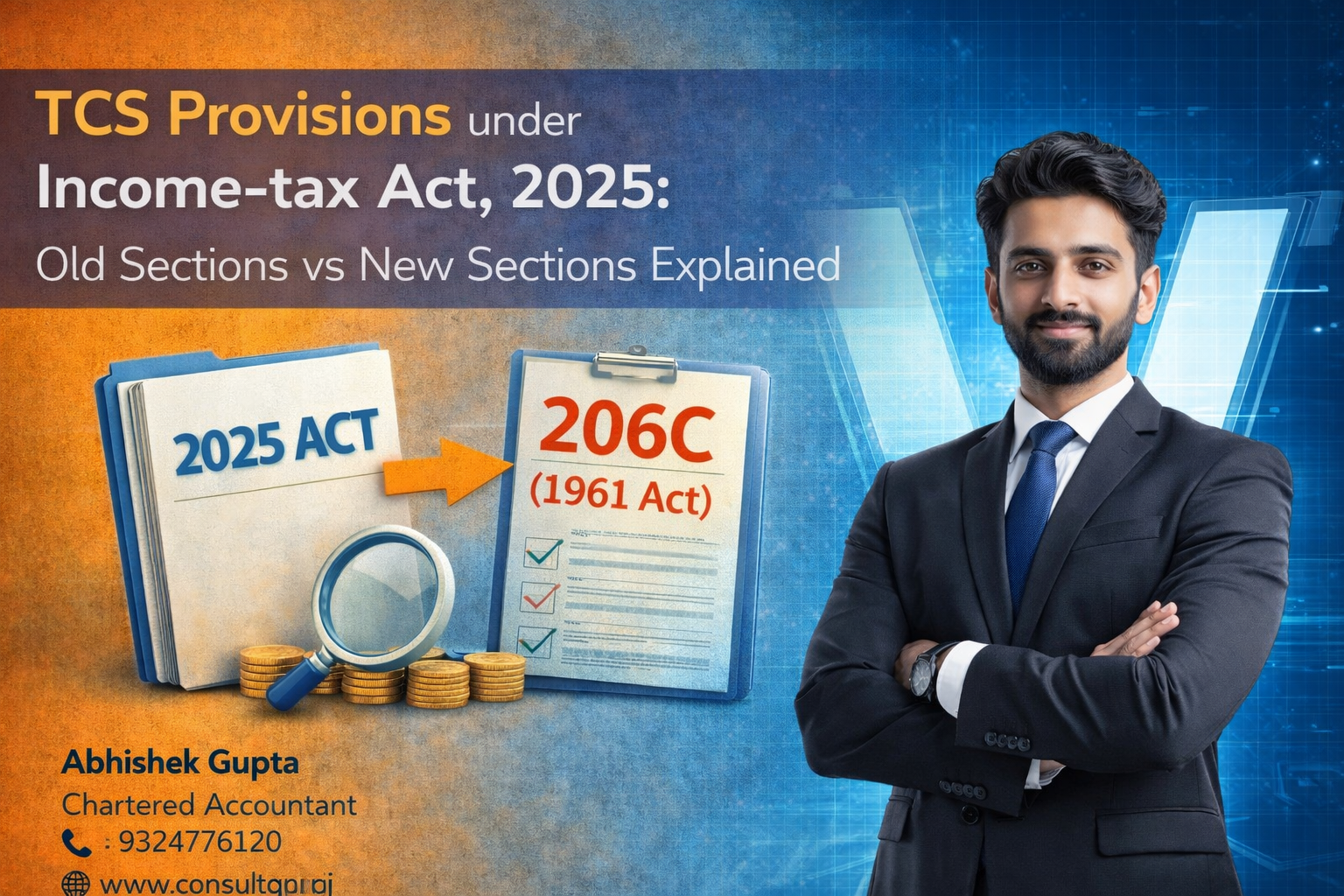
TCS Provisions under Income-tax Act, 2025: Old Sections vs New Sections Explained

Introduction
Tax Collected at Source (TCS) is an important compliance mechanism under India’s income-tax law, ensuring tax collection at the point of sale of specified goods or receipt of certain payments. Under the Income-tax Act, 2025, TCS provisions have been restructured and renumbered to improve clarity and ease of compliance, while the substantive provisions largely remain unchanged from the Income-tax Act, 1961.
This article explains how TCS provisions have been reorganised in the new Act and maps the old sections with the new ones.
TCS Framework: What Has Changed in 2025 Act
Under the Income-tax Act, 1961, TCS provisions were mainly covered under Section 206C, along with related explanations, provisos, and exceptions added over time. Frequent amendments made the section lengthy and complex.
The Income-tax Act, 2025 aims to:
Break down bulky sections into logically grouped provisions
Use simpler language
Improve section-wise readability
Retain the same compliance intent without changing tax liability
Key Areas Covered under TCS Provisions
The reorganised TCS framework under the 2025 Act continues to cover:
TCS on sale of specified goods
TCS on foreign remittances under LRS
TCS on overseas tour packages
TCS on sale of motor vehicles above prescribed value
Higher TCS rates for non-PAN / non-Aadhaar cases
Adjustments, refunds, and credit of TCS
Only the section numbers and structure have changed.
Why Section-wise Mapping Matters
Understanding old vs new section mapping is critical for:
Chartered Accountants and tax professionals
Businesses responsible for TCS compliance
Updating internal SOPs and checklists
Replying to notices and assessments
Training accounts and finance teams
Old section references in contracts, manuals, and legal documents must now be aligned with the new section numbers under the 2025 Act.
Impact on Taxpayers and Businesses
No new tax burden merely due to renumbering
Existing compliance processes remain valid
Better clarity during audits and assessments
Easier interpretation for future amendments
Taxpayers should, however, ensure that returns, challans, and internal references are updated as per the new Act.
Conclusion
The Income-tax Act, 2025 does not reinvent TCS provisions but repackages them in a cleaner and more structured manner. Once professionals understand the section-wise mapping, compliance under the new law becomes smoother and more predictable.
Staying updated with these structural changes is essential to avoid technical errors and ensure seamless tax compliance.
Written by:
Abhishek Gupta
Chartered Accountant
Office No. 19, Sagar Building, 4th Floor, Plot-327,
Narshi Natha Street, Masjid Bunder (West),
Mumbai – 400009
📞 9324776120
🌐 www.consultguruji.com