


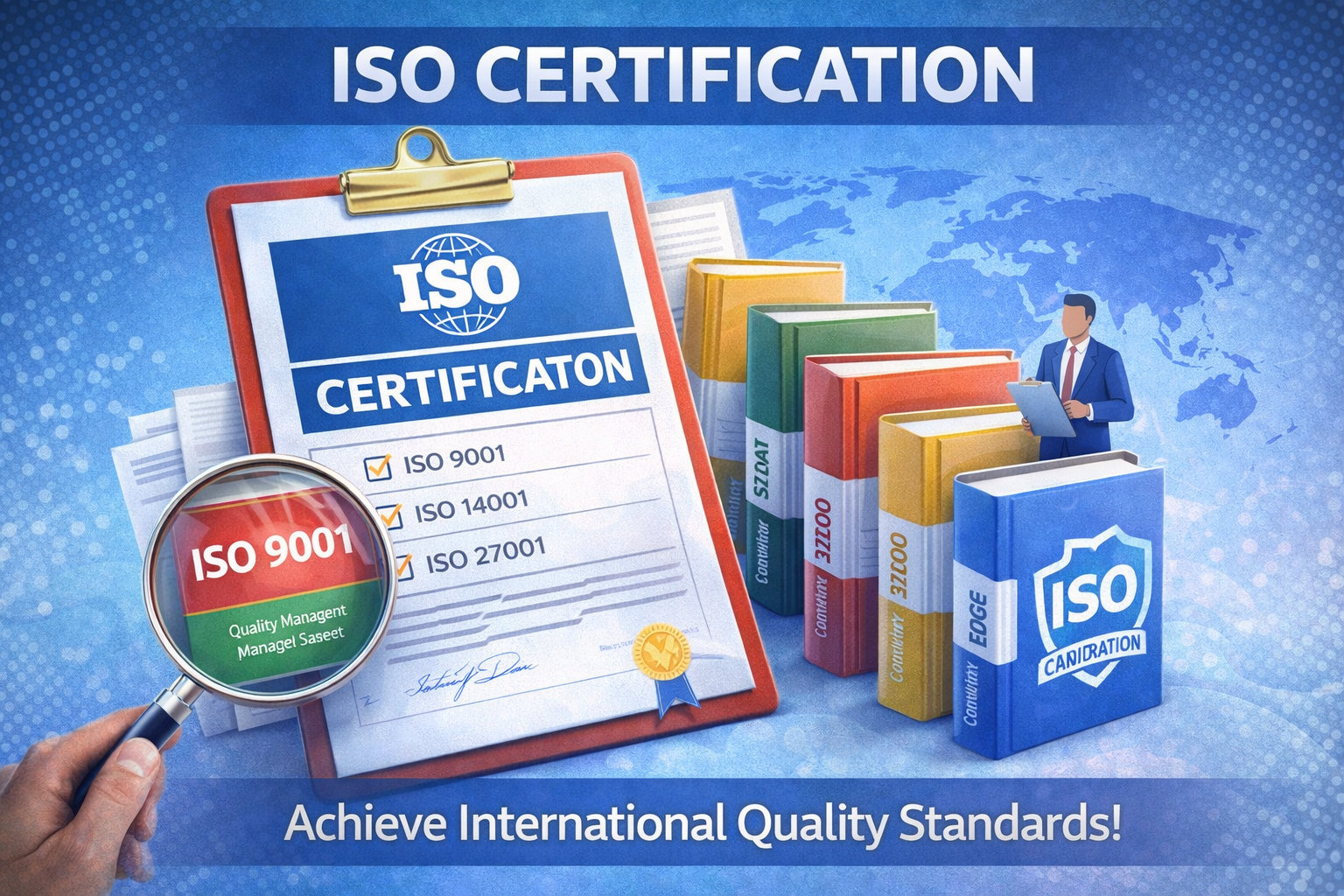
Key Components of ISO Certification:
Preparation:
Selection of ISO Standard:
Identify the appropriate ISO standard based on business type and industry requirements such as:
-
ISO 9001 (Quality Management System)
-
ISO 14001 (Environmental Management System)
-
ISO 27001 (Information Security Management System)
-
ISO 45001 (Occupational Health & Safety)
Gap Analysis:
Conduct a gap analysis to evaluate the current business processes and identify areas that need improvement to meet ISO standards.
Documentation:
Prepare required documents including quality manual, policies, procedures, SOPs, and records as per ISO requirements.
Implementation Process:
Process Alignment:
Implement standardized procedures and internal controls according to ISO guidelines.
Employee Training:
Train employees regarding ISO policies, compliance requirements, and operational standards.
Internal Audit:
Conduct internal audits to ensure that processes are properly implemented and compliant.
Audit and Certification:
Stage 1 Audit (Document Review):
Certification body reviews documentation and evaluates readiness for final audit.
Stage 2 Audit (Final Audit):
On-site or remote audit is conducted to verify practical implementation of ISO standards.
Certification Issuance:
Upon successful audit, the ISO Certificate is issued, generally valid for 3 years (subject to surveillance audits).
Post-Certification Requirements:
Surveillance Audit:
Periodic audits (usually annual) are conducted to ensure continuous compliance.
Continuous Improvement:
Maintain updated documentation and improve processes regularly as per ISO standards.
Fee Structure:
Professional Fees:
Charges for consultation, documentation, audit preparation, and coordination.
Certification Body Fees:
Fees payable to the accredited certification body for conducting audits and issuing the certificate.
Benefits of ISO Certification:
Enhanced Credibility:
Builds trust among customers, clients, and stakeholders.
Improved Process Efficiency:
Standardized processes reduce errors and increase operational efficiency.
Competitive Advantage:
Helps in winning tenders, government contracts, and international business opportunities.
Customer Satisfaction:
Improves product/service quality and enhances customer confidence.
Risk Management:
Reduces operational risks through systematic control measures.
Challenges:
Documentation Intensive:
Requires proper documentation and record maintenance.
Implementation Time:
May take time to align processes with ISO standards.
Cost Factor:
Involves consultancy and certification body fees.
Ongoing Compliance:
Continuous monitoring and audits are necessary to maintain certification validity.
Conclusion:
ISO Certification is a powerful tool to enhance business credibility, improve operational efficiency, and gain a competitive edge in the market. By implementing standardized processes and maintaining compliance, businesses can build strong customer trust and achieve long-term growth. Proper guidance and professional assistance ensure a smooth and successful ISO certification process.