

DSC vs Electronic Signature – What is the Difference?

Introduction
In the digital world, signing documents online has become very common. Two popular methods used for this purpose are Digital Signature Certificate (DSC) and Electronic Signature (eSign). Although both are used to sign documents electronically, many people get confused about their differences.
In this blog, we will explain DSC vs Electronic Signature, their meaning, usage, legal validity, and key differences to help you choose the right option.
What is a Digital Signature Certificate (DSC)?
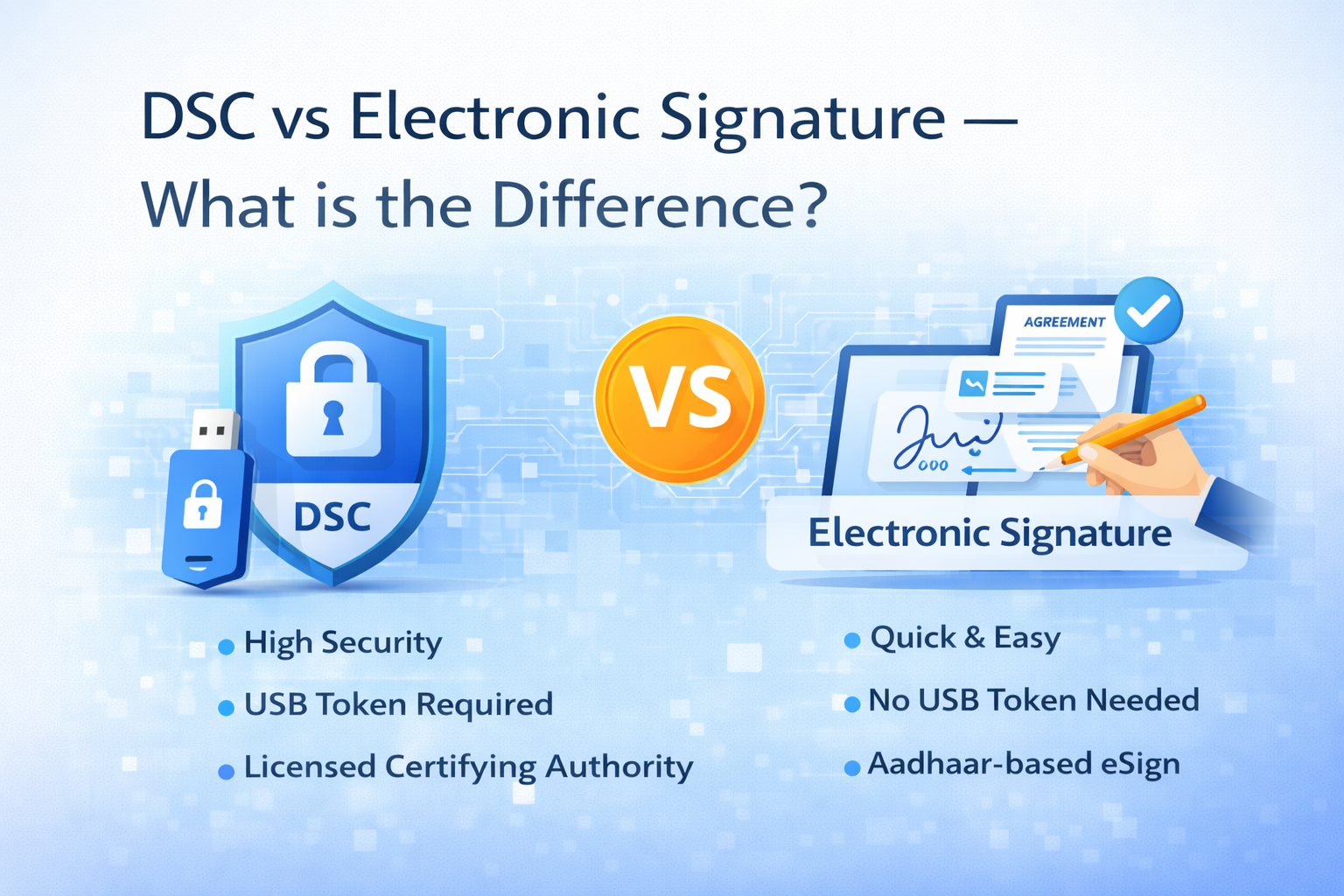
A Digital Signature Certificate (DSC) is a secure digital key issued by a government-authorized Certifying Authority (CA). It verifies the identity of the signer and ensures that the signed document is not altered.
Key Features of DSC:
-
Issued by licensed Certifying Authorities
-
Requires USB token for storage
-
High level of security
-
Mandatory for many government filings
What is an Electronic Signature (eSign)?
An Electronic Signature (eSign) is a simple and paperless way to sign documents electronically, usually through Aadhaar-based authentication. It is widely used for quick approvals and basic documentation.
Key Features of eSign:
-
Aadhaar-based verification
-
No USB token required
-
Easy and quick to use
-
Suitable for low-risk documents
DSC vs Electronic Signature – Key Differences
| Basis | Digital Signature Certificate (DSC) | Electronic Signature (eSign) |
|---|---|---|
| Security Level | High | Medium |
| Issuing Authority | Licensed Certifying Authority | Aadhaar-based service provider |
| Storage | USB Token required | Cloud-based |
| Legal Validity | Fully legally valid | Legally valid |
| Usage | GST, MCA, IT, Tenders | Agreements, forms, approvals |
| Cost | Paid | Usually low cost or free |
| Validity | 1 or 2 years | Per transaction |
When Should You Use DSC?
You should use DSC when:
-
Filing GST returns
-
MCA / ROC compliance
-
Income Tax filings
-
E-tendering & e-procurement
-
High-security business transactions
When Should You Use Electronic Signature?
You should use eSign when:
-
Signing agreements or contracts
-
Bank and loan documentation
-
HR and employment documents
-
Consent forms and approvals
Legal Validity of DSC and eSign
Both DSC and eSign are legally recognized under the Information Technology Act, 2000. However, DSC is mandatory for specific government portals, whereas eSign is optional and situational.
Conclusion
Both Digital Signature Certificate (DSC) and Electronic Signature (eSign) play important roles in digital documentation. If you need high security, compliance, and government acceptance, DSC is the right choice. For quick, simple, and paperless signing, eSign is more convenient.
Written by:
Abhishek Gupta
Chartered Accountant
Office No. 19, Sagar Building, 4th Floor, Plot-327,
Narshi Natha Street, Masjid Bunder (West),
Mumbai – 400009
📞9324776120
🌐 www.consultguruji.com