

Reassessment Invalid Without Fresh Material: High Court Restricts Arbitrary Reopening by Tax Department

Reassessment Invalid Without Fresh Material: High Court Restricts Arbitrary Reopening by Tax Department
Background of the Case
The assessee’s return was originally selected for scrutiny under Section 143(3) of the Income Tax Act.
During the assessment proceedings:
-
All primary facts were disclosed
-
Relevant documents were submitted
-
Queries raised by the Assessing Officer were properly replied to
After completion of assessment, the department issued a notice under Section 148 seeking to reopen the case.
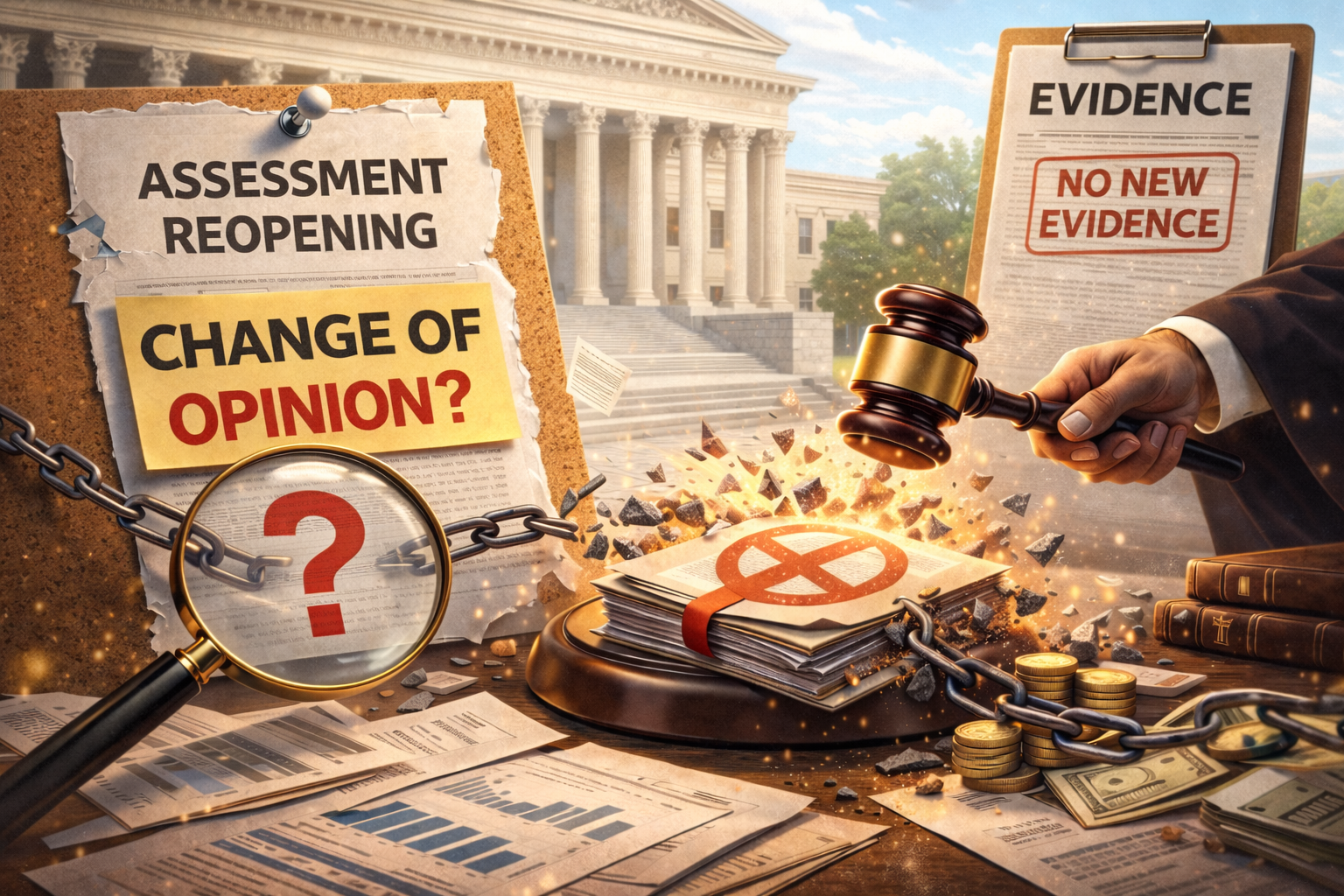
The reason? The officer formed a different view on the same set of facts already examined earlier.
Issue Before the Court
Can the Income Tax Department reopen an assessment merely because the officer now has a different opinion on the same material?
In simple words:
Is “change of opinion” a valid ground for reassessment?
Legal Position
Under Sections 147/148 of the Income Tax Act:
-
Reassessment is allowed only if there is “reason to believe” that income has escaped assessment.
-
Such belief must be based on new tangible material.
Reopening cannot be done on mere re-evaluation of already examined facts.
Court’s Observations
The High Court made important observations:
-
All material facts were fully disclosed during original scrutiny.
-
The issue was already examined by the Assessing Officer.
-
There was no new information or fresh evidence.
-
Reopening based on reinterpretation of the same material amounts to change of opinion.
The Court held that reassessment power cannot be used for review.
Key Principle Laid Down
Once a scrutiny assessment is completed:
✔ Reopening requires fresh tangible material
✔ Mere change of opinion is not permitted
✔ Reassessment cannot become a tool for review
The power under Section 147 is not unlimited.
Final Decision
The High Court quashed the reassessment notice.
The Court ruled that:
-
The reopening was invalid in law
-
It was based purely on change of opinion
-
No fresh material existed
Therefore, the reassessment proceedings were set aside.
Practical Impact for Taxpayers
What this really means:
-
If you disclosed all facts honestly during scrutiny, you are protected.
-
Department cannot reopen assessments casually.
-
“Change of opinion” alone is not a legal ground.
-
Reassessment must be backed by new evidence.
Conclusion
Reassessment is a serious power.
It cannot be exercised to correct perceived mistakes or to take a second look at the same issue.
Unless fresh tangible material exists, reopening of completed assessment is legally unsustainable.