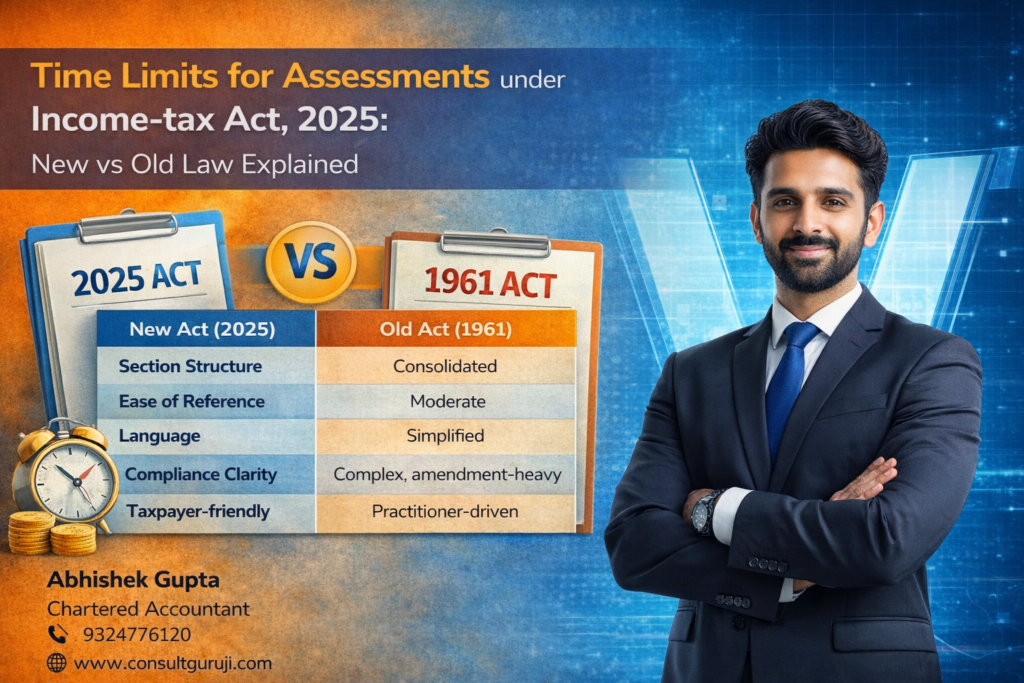


Tabular Mapping of Sections: Income-tax Act, 2025 vis-à-vis Income-tax Act, 1961 Explained

Introduction
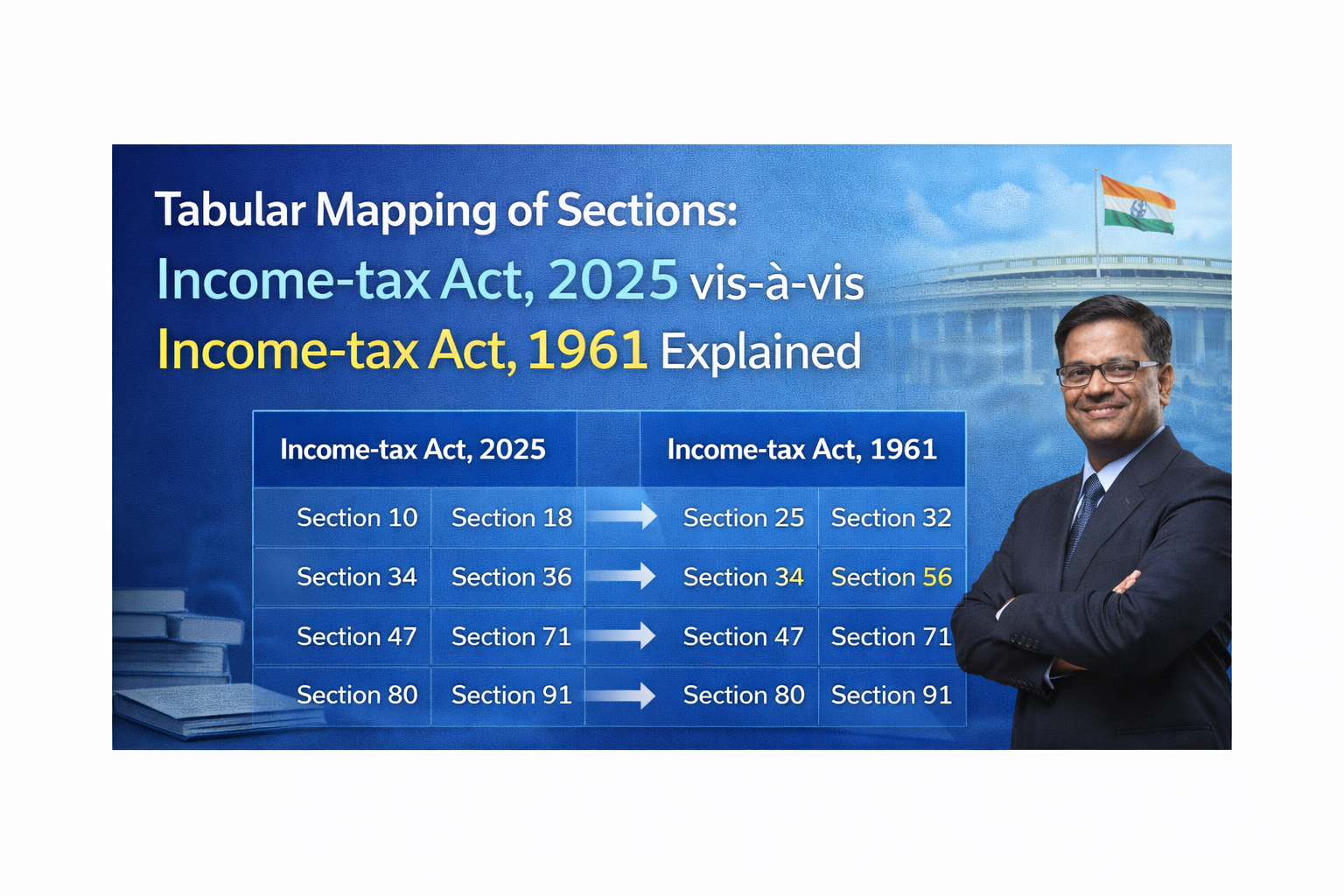
With the introduction of the Income-tax Act, 2025, the Government has focused on simplifying and restructuring India’s direct tax law. One of the most important tools provided for a smooth transition is the tabular mapping of sections of the Income-tax Act, 2025 vis-à-vis the Income-tax Act, 1961.
This mapping helps taxpayers and professionals understand how provisions under the old Act correspond to sections in the new Act.
Why Tabular Mapping of Sections Is Important
The Income-tax Act, 1961 has been amended numerous times over the years, making it complex and difficult to navigate. When a new Act is introduced, the biggest challenge is identifying where existing provisions have moved.
Tabular mapping solves this problem by clearly showing:
Old section numbers under the 1961 Act
Corresponding new sections under the 2025 Act
Re-numbered, merged, or reorganised provisions
What Does “Vis-à-vis” Mapping Mean
“Vis-à-vis” means side-by-side comparison.
In this context, it refers to a comparative table that places sections of the Income-tax Act, 2025 alongside their equivalent sections in the Income-tax Act, 1961.
This enables quick reference and avoids confusion during interpretation and compliance.
Benefits of Section-wise Tabular Mapping
1. Smooth Transition to the New Act
Tax professionals familiar with the 1961 Act can easily adapt to the 2025 Act without relearning concepts from scratch.
2. Ease in Assessments and Appeals
Ongoing assessments, appeals, and litigation often refer to old section numbers. Mapping helps relate them correctly to the new law.
3. Better Compliance
Clear identification of applicable provisions reduces errors in return filing and reporting.
4. Time-saving for Professionals
Instead of searching the entire Act, professionals can directly locate the relevant section using the mapping table.
Does Tabular Mapping Change Tax Provisions
The tabular mapping itself does not change the substance of tax law.
Its purpose is to reorganise and renumber provisions for clarity and simplicity. In most cases, the underlying principles, tax rates, and compliance requirements remain consistent, subject to drafting improvements.
Who Should Refer to This Mapping
Chartered Accountants and tax practitioners
Businesses and finance teams
Students of taxation and law
Taxpayers dealing with scrutiny or appeals
Early understanding of section mapping will help avoid confusion once the Income-tax Act, 2025 is fully implemented.
Conclusion
The tabular mapping of sections of the Income-tax Act, 2025 vis-à-vis the Income-tax Act, 1961 is a crucial transitional tool. It ensures continuity, clarity, and confidence for all stakeholders while moving toward a simplified and more structured tax law framework.
Written by:
Abhishek Gupta
Chartered Accountant
Office No. 19, Sagar Building, 4th Floor, Plot-327,
Narshi Natha Street, Masjid Bunder (West),
Mumbai – 400009
📞9324776120
🌐 www.consultguruji.com